🌼 Flowers Along the Trail
You don't have to climb the highest hill or hike the longest trail to discover something beautiful at Train Mountain.
Some of the mountain's greatest treasures are blooming right beside the path.
From tiny wild strawberries hiding beneath the leaves to brilliant Indian Paintbrush lighting up the hillsides, every season brings new colors, new discoveries, and new reasons to stop and take a closer look.
As you explore, remember that every flower has a story. Some feed busy bees and fluttering butterflies. Others help the forest grow stronger. A few are so unusual that they almost seem magical.
So slow down, keep your peepers peeled, and let the flowers show you just how wonderful the mountain can be.
Every blossom is an invitation to explore.
Flowers Along the Trail
Indian Paintbrush (Castilleja species)
Common Yarrow (Achillea millefolium)
Wild Strawberry (Fragaria species)
Lupine (Lupinus species)
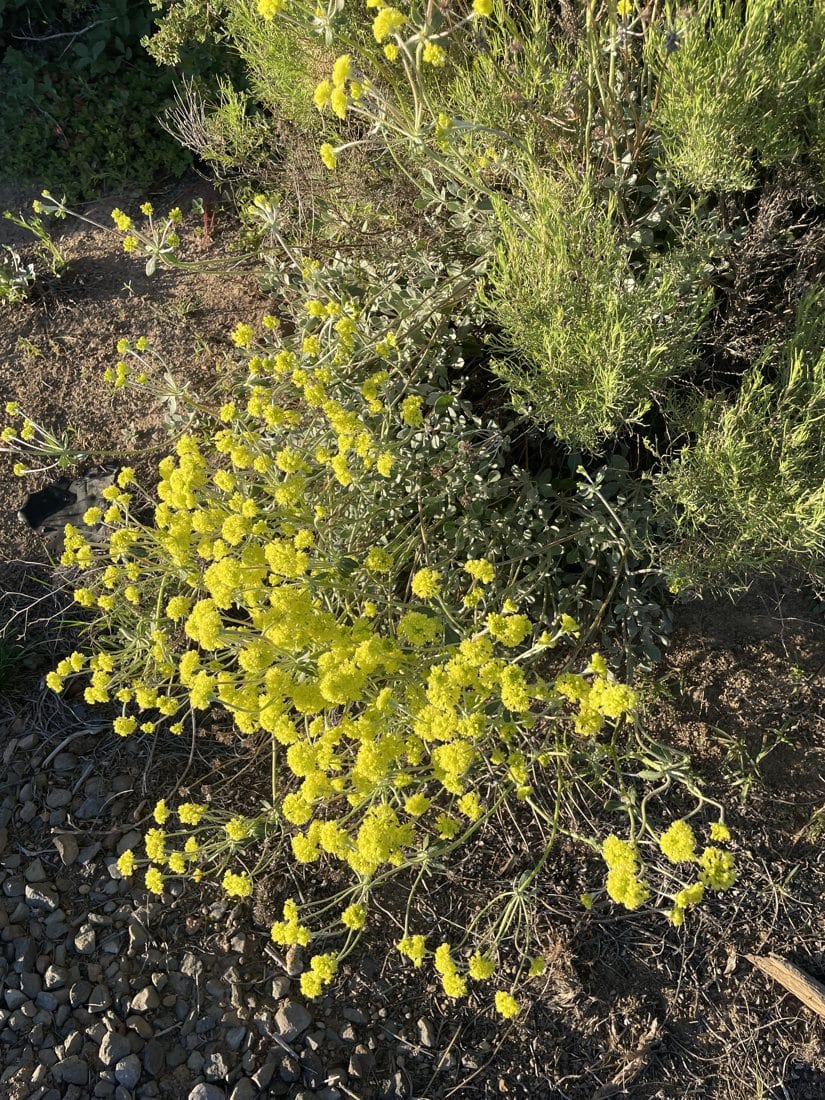
Sulphur Buckwheat (Eriogonum umbellatum)
Oregon Sunshine (Eriophyllum lanatum)
Mountain Garland (the white spring flower we identified earlier)
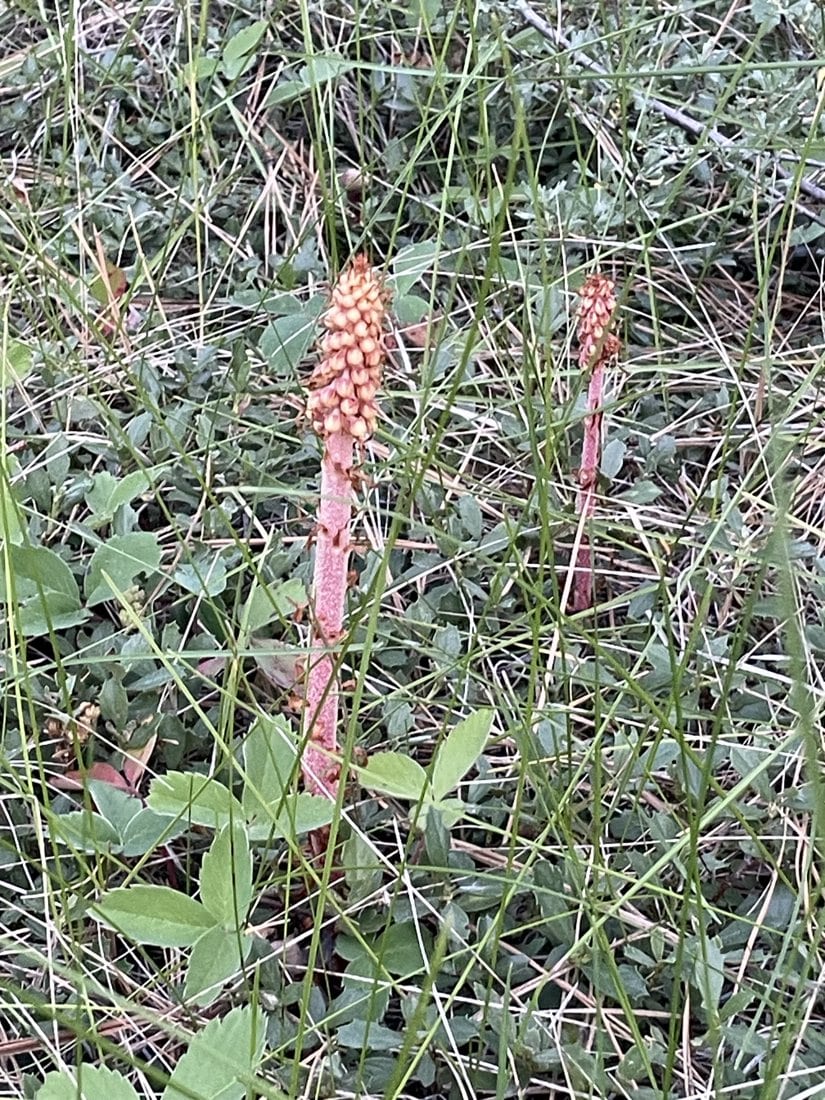
Forest Mysteries - Pinedrops
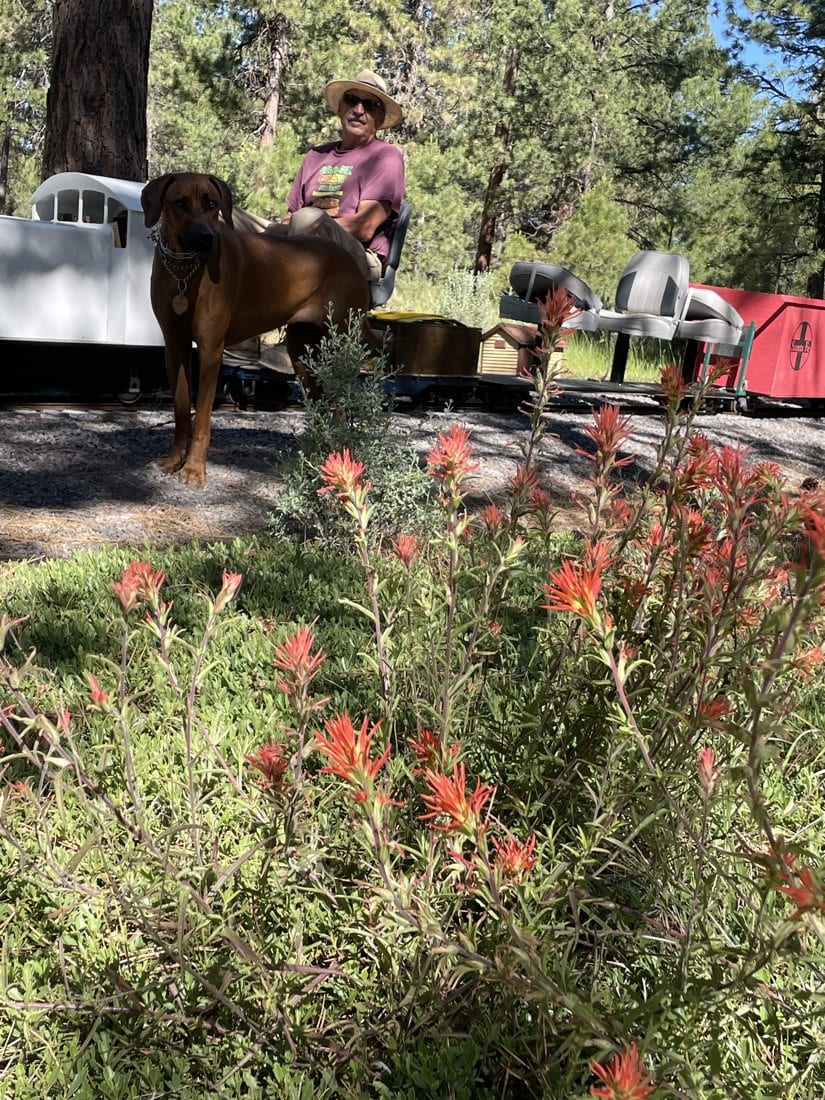
Indian Paintbrush
Castilleja species
When Will You Find Me? 🌞
Late spring through summer, usually from May through July, depending on the weather. Every year is a little different!
Keep Your Peepers Peeled! 👀
Look for brilliant splashes of scarlet, orange, and crimson growing among the grasses and beneath the tall Ponderosa pines. From a distance, it looks as if someone dipped the tops of the flowers into bright red paint!
🚂 Look who came rolling by!
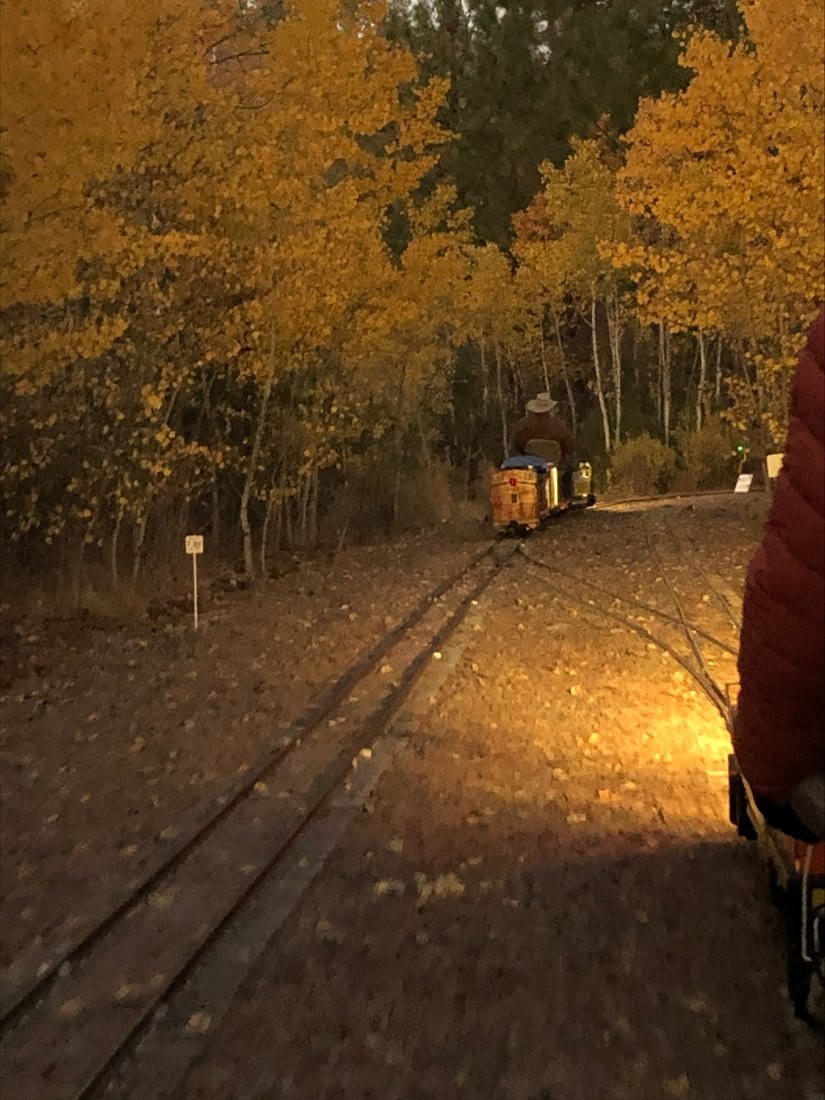
While photographing this beautiful patch of Indian Paintbrush, Ronnie and Marigold happened to pass by on their miniature train. Around Train Mountain, nature and railroading have a wonderful way of sharing the same trail.
How Tall Will I Be? 📏
Usually 6 to 24 inches tall—about as high as your knee. The flowers often wave gently in the summer breeze.
Nature's Little Secret 🤫
Here's something surprising...
Those bright red "petals" aren't actually petals at all! They're colorful leaves called bracts. The real flowers are the tiny blossoms tucked safely inside.
Even more amazing, Indian Paintbrush sometimes shares water and nutrients with neighboring plants through its roots. Nature is full of teamwork!
Who Loves Me? 🦋
Hummingbirds zip in for a sweet drink of nectar.
Bees buzz from flower to flower.
Butterflies stop by for a visit.
If you sit quietly for a few minutes, chances are you'll see one of them stop by.
Where Should I Look? 🚶
Sunny meadows.
Along forest trails.
Openings beneath the tall pines.
You'll often find Indian Paintbrush growing alongside Lupines and other colorful summer wildflowers.
Why We Love It ❤️
Indian Paintbrush is one of the flowers that tells us summer has truly arrived at Train Mountain.
Its brilliant colors seem to glow against the green forest, and if you're lucky, you might spot a miniature train quietly rolling past in the background. That's one of those magical Train Mountain moments you'll never forget.
Did You Know? 🌟
Indian Paintbrush comes in many colors! While the bright red flowers are the most famous, some bloom in orange, yellow, pink, or even creamy white.
🔍 Goldie's Nature Challenge
Can you find an Indian Paintbrush growing next to a completely different wildflower?
Nature loves making beautiful bouquets all by herself.
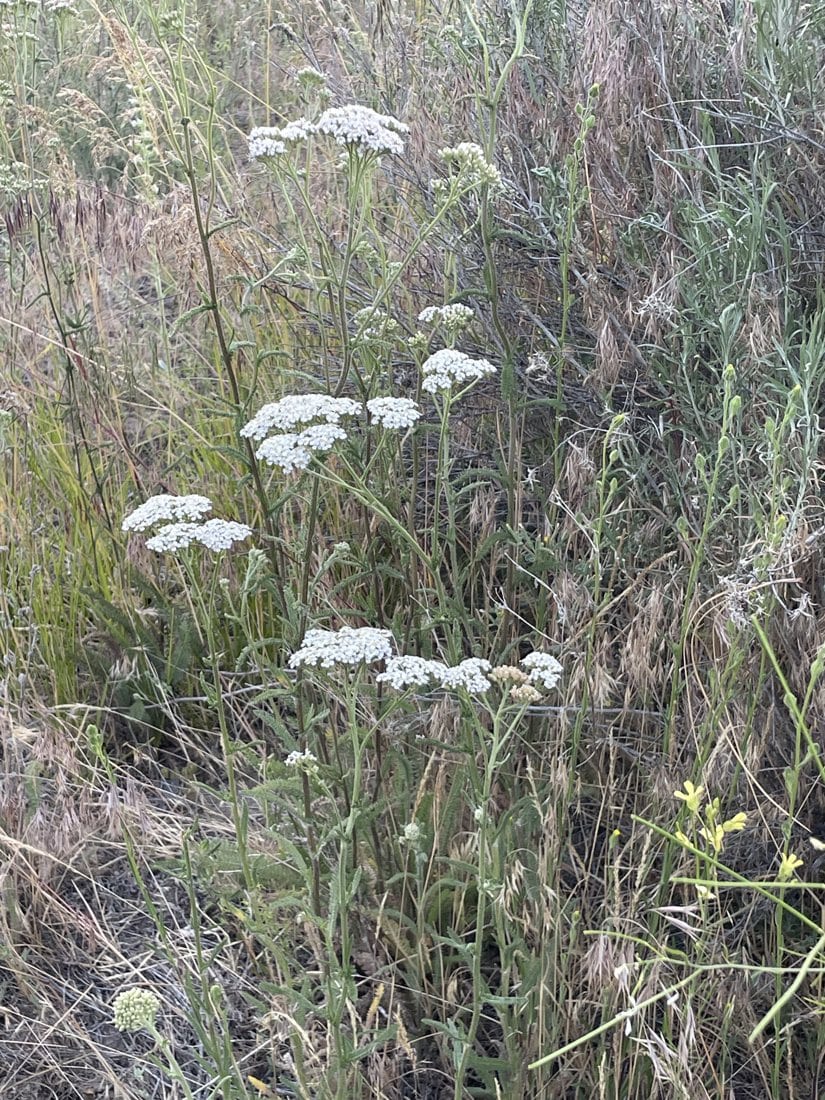
🤍 Common Yarrow
Achillea millefolium
👀 Keep Your Peepers Peeled!
At first glance, Common Yarrow may not seem as flashy as Indian Paintbrush or Lupine, but don't let that fool you. Look for clusters of tiny white flowers growing together like little umbrellas floating above delicate, fern-like leaves.
Once you learn to recognize Yarrow, you'll start seeing it all over Train Mountain!
From a distance, Common Yarrow can look a little like Queen Anne's Lace and several other white wildflowers. Because some look-alike plants can be harmful, it's always best to admire wildflowers without picking or eating them unless you're exploring with an experienced naturalist.
📅 When Will You Find Me?
Yarrow usually begins blooming in late spring and continues well into summer, often brightening the trails from June through August.
📏 How Tall Will I Be?
Most Common Yarrow grows 1 to 3 feet tall, making it easy to spot rising above the grasses along sunny trails and meadows.
🤫 Nature's Little Secret
Yarrow has been growing alongside people for thousands of years. Long before modern medicine, many Indigenous peoples and early settlers valued it as one of nature's useful plants. Today, it's admired just as much for its beauty as for its fascinating history.
Its scientific name, Achillea, comes from the ancient Greek hero Achilles, who, according to legend, used yarrow to help treat wounds during the Trojan War.
🦋 Who Loves Me?
Yarrow is a favorite stop for many busy visitors:
🐝 Honeybees and native bees
🦋 Butterflies
🪰 Helpful pollinating flies
🐞 Beneficial insects that help keep gardens healthy
Its flat flower clusters make the perfect landing pad for tiny pollinators.
🚶 Where Should I Look?
Look for Common Yarrow growing in:
Sunny meadows
Along forest trails
Open pine forests
Roadside clearings
It often grows beside Lupines, Oregon Sunshine, and other native wildflowers.
❤️ Why We Love It
Common Yarrow reminds us that some of nature's greatest treasures aren't always the loudest or brightest. Its delicate white blossoms add a quiet elegance to the mountain, inviting us to slow down and notice the beauty found in even the smallest flowers.
Sometimes, the most memorable discoveries are the ones we almost walked past.
🌟 Did You Know?
Although each Yarrow flower looks tiny, what you're actually seeing is a cluster of dozens of tiny flowers growing together! That's why butterflies and bees love visiting them—they can gather nectar from many flowers without flying very far.
🚂 Train Mountain Moment
Yarrow often grows beside the railroad right-of-way, gently waving in the breeze as miniature trains glide quietly past. It's a beautiful reminder that even the smallest wildflowers have a place in the grand adventure of Train Mountain.
🔍 Goldie's Nature Challenge
Look closely at one cluster of Yarrow flowers.
Can you count how many tiny blossoms make up just one flower head?
(Hint: It might be a lot more than you think!)
📖 Auntie Ann's Nature Note
Yarrow has always reminded me that not every flower needs to be bright red or bright yellow to be beautiful. Sometimes the quietest flowers are the ones that make a meadow feel complete. If you stop for just a moment and watch the bees visiting Yarrow, you'll discover that nature's smallest wonders are often its busiest. 🌼
Here at Train Mountain, we like to remember three simple rules:
👀 Look with your eyes, not your taste buds.
📸 Take only pictures.
👣 Leave only footprints.
That way, the flowers can continue blooming for the butterflies, the bees, the woodland creatures...and for the next family who comes along to discover them.
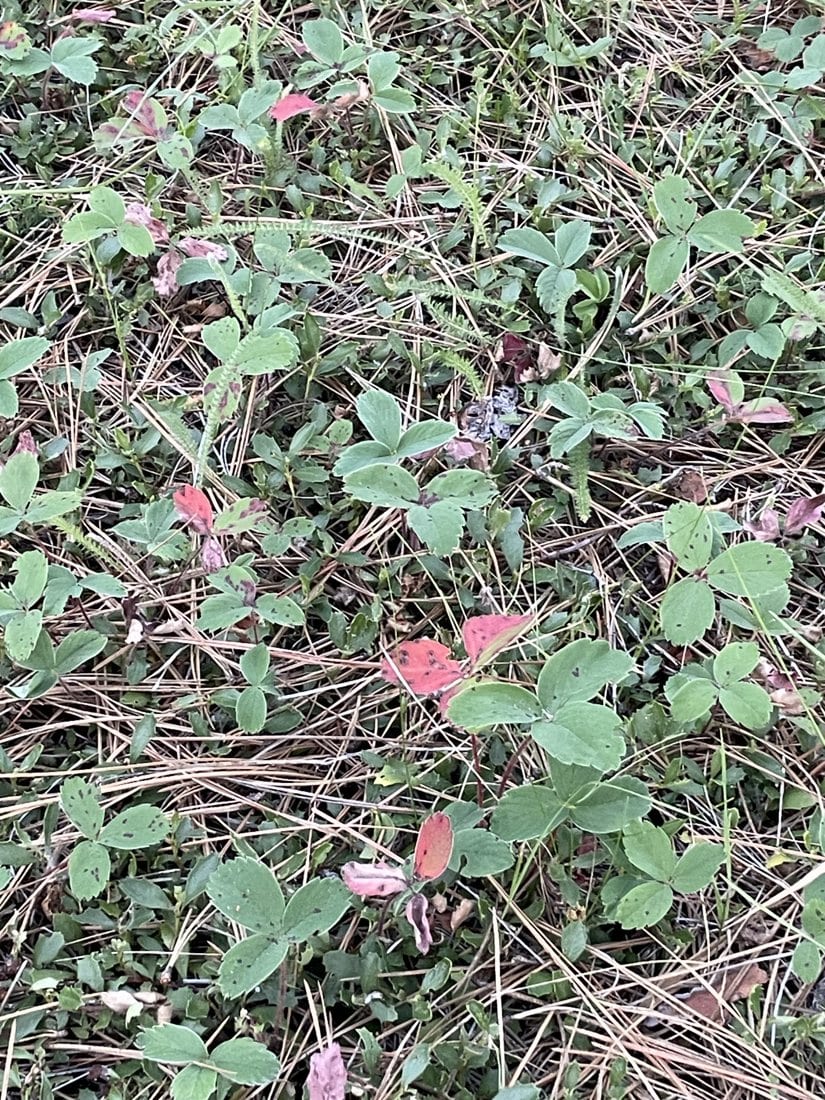
🍓 Wild Strawberry
Fragaria species
👀 Keep Your Peepers Peeled!
Keep an eye out for tiny white flowers with cheerful yellow centers hiding low among the grasses. By early summer, those blossoms transform into the cutest little strawberries you've ever seen!
Don't expect grocery-store giants, though. Wild strawberries are about the size of your thumbnail—or even smaller.
📅 When Will You Find Me?
Look for delicate white blossoms in late spring, with ripe berries appearing in early summer, usually from June into July, depending on the weather.
📏 How Big Will I Be?
Wild Strawberry plants stay close to the ground, usually growing only 2 to 6 inches tall. Their slender runners spread across the forest floor, creating little patches of green.
🤫 Nature's Little Secret
Wild Strawberries don't just grow from seeds. They also send out long, slender stems called runners. Wherever a runner touches the ground, a brand-new strawberry plant can take root. Before long, one little plant can grow into an entire family!
🦋 Who Loves Me?
Wild Strawberries are popular with all kinds of forest friends:
🐝 Bees visit the blossoms.
🦋 Butterflies stop for nectar.
🐦 Birds enjoy the ripe berries.
🐿️ Chipmunks and squirrels are always happy to discover a sweet snack.
🦌 Deer occasionally nibble the leaves.
If you're hoping to find a ripe berry, remember—you may have competition!
🚶 Where Should I Look?
Look along sunny trails, forest edges, open meadows, and beneath the tall Ponderosa pines. Wild Strawberries often grow where a little sunshine reaches the forest floor.
❤️ Why We Love It
Finding a patch of Wild Strawberries always feels like discovering hidden treasure.
Their tiny blossoms brighten the forest in spring, and their bright red berries remind us that some of nature's sweetest gifts come in the smallest packages. They're one more reason to slow down, look closely, and enjoy the little surprises waiting along the trail.
🌟 Did You Know?
Although they're much smaller than the strawberries you find at the grocery store, many people think Wild Strawberries have a sweeter, richer flavor. Their wonderful fragrance is often even bigger than the berries themselves!
🚂 Train Mountain Moment
Goldie and Mitch are always on the lookout for Wild Strawberries during their summer adventures. While they carefully search the forest floor, they sometimes hear the distant whistle of a miniature train drifting through the pines—a gentle reminder that wonderful discoveries can be found both on the railroad and beside the trail.
🔍 Goldie's Nature Challenge
Can you find all three stages of a Wild Strawberry?
🌼 A white flower
🟢 A tiny green berry
🍓 A ripe red strawberry
If you do, you've found the strawberry's whole life story!
🌿 Auntie Ann's Nature Note
Wild Strawberries are one of the forest's sweetest surprises—but they're also an important food for birds and wildlife.
So remember our Hidden World promise:
👀 Look with your eyes, not your taste buds.
📸 Take only pictures.
👣 Leave only footprints.
That way, the berries can continue feeding the woodland creatures...and delight the next explorer who discovers them.
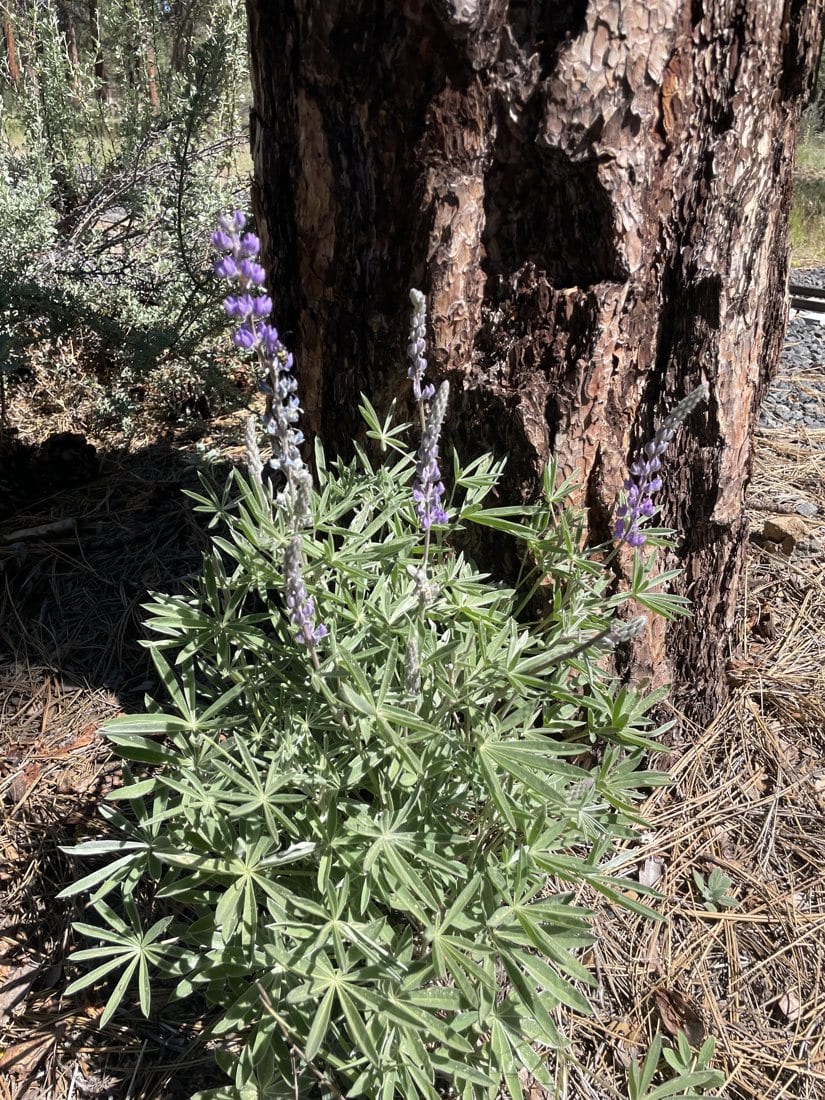
💜 Lupine
Lupinus species
👀 Keep Your Peepers Peeled!
If you spot tall spikes of brilliant purple, blue, pink, or even white flowers rising above the meadow, you've probably found Lupine! Their colorful blossoms stand like little towers, adding splashes of color beneath the towering Ponderosa pines.
On a breezy summer day, entire patches of Lupine gently sway together, creating one of Train Mountain's prettiest displays.
📅 When Will You Find Me?
Lupines usually begin blooming in late spring and continue through early summer, often from May into July, depending on the weather and elevation.
📏 How Tall Will I Be?
Most Lupines grow between 1 and 3 feet tall, although some plants may grow even taller in good conditions.
🤫 Nature's Little Secret
Lupines are nature's gardeners!
Tiny bacteria living on their roots help capture nitrogen from the air and return it to the soil. That means Lupines don't just make the mountain more beautiful—they help other plants grow, too.
🦋 Who Loves Me?
Lupines are a favorite gathering place for wildlife.
🐝 Bumblebees buzz from flower to flower collecting nectar.
🦋 Butterflies stop by for a sweet treat.
🐦 Birds later enjoy the seeds.
🐇 Small animals find shelter among the tall stems.
A patch of blooming Lupine is always buzzing with activity.
🚶 Where Should I Look?
Look for Lupines in sunny meadows, forest openings, and along trails throughout Train Mountain. They often grow alongside Indian Paintbrush, Yarrow, Oregon Sunshine, and other colorful wildflowers.
❤️ Why We Love It
Few flowers say "summer at Train Mountain" quite like Lupine.
Their colorful blossoms brighten the mountain just as visitors from around the world arrive to ride the miniature trains. Together, the flowers, the forest, and the sound of distant whistles create memories that last a lifetime.
🌟 Did You Know?
Each Lupine flower spike is actually made up of dozens of tiny individual blossoms. As the season progresses, the flowers bloom from the bottom of the stalk upward, so no two days look exactly the same!
🚂 Train Mountain Moment
One of our favorite sights is watching a miniature train quietly wind through the forest while a hillside of blooming Lupines dances in the summer breeze. It feels as though the flowers are waving hello to every passing engineer.
🔍 Goldie's Nature Challenge
Take a close look at one Lupine flower spike.
Can you find:
💜 A flower that's just beginning to open?
🐝 A busy bee collecting nectar?
🌱 A seed pod forming where a flower has already bloomed?
You've just discovered three stages of a Lupine's amazing life!
🌿 Auntie Ann's Nature Note
Lupines are beautiful, but remember—they're even more beautiful when everyone gets a chance to enjoy them.
👀 Look with your eyes, not your taste buds.
📸 Take only pictures.
👣 Leave only footprints.
That way, the Lupines can continue blooming for the butterflies, the bees, the woodland creatures...and for every family who comes to discover the Hidden World.
☀️ Sulphur Buckwheat
Eriogonum umbellatum
👀 Keep Your Peepers Peeled!
Look for bright clusters of cheerful yellow flowers growing low to the ground in sunny, rocky places. From a distance, they look like little splashes of sunshine sprinkled across the forest floor.
If you're hiking on a warm summer day, these golden blooms are hard to miss!
📅 When Will You Find Me?
Sulphur Buckwheat usually blooms from late spring through midsummer, often from June into August, depending on the weather.
📏 How Big Will I Be?
Most plants grow only 6 to 18 inches tall, but they spread into neat little mounds that can be nearly two feet across.
🤫 Nature's Little Secret
Sulphur Buckwheat is one tough little plant.
It loves dry, sunny hillsides where many other flowers struggle to grow. Its small, leathery leaves help it hold onto water during the hot summer months, making it perfectly suited for life at Train Mountain.
Even after the bright yellow flowers fade, they often turn beautiful shades of orange, rust, and cinnamon, giving the plant a second season of color.
🦋 Who Loves Me?
This flower is one of the busiest restaurants on the mountain!
You'll often find:
🐝 Bumblebees
🦋 Butterflies
🐝 Native bees
🐞 Tiny beneficial insects
All stopping by for a meal.
If you quietly watch a blooming plant for just a minute or two, you're almost guaranteed to see a visitor.
🚶 Where Should I Look?
Look in sunny clearings, open pine forests, rocky slopes, and along trails throughout Train Mountain. Sulphur Buckwheat loves sunshine and often grows where the soil is dry and well-drained.
❤️ Why We Love It
Sulphur Buckwheat reminds us that beauty doesn't have to be big to be spectacular.
Its cheerful yellow flowers seem to light up the mountain, especially against the gray rocks, green pines, and blue summer skies. Sometimes the smallest patches of color are the ones that make us stop and smile.
🌟 Did You Know?
The flowers don't stay yellow forever!
As summer turns to fall, many Sulphur Buckwheat blossoms slowly change to shades of orange, pink, copper, and rusty red—almost as if the plant is celebrating autumn before the leaves begin to change.
🚂 Train Mountain Moment
One of our favorite summer sights is watching a miniature train round a gentle curve while bright patches of Sulphur Buckwheat sparkle beside the tracks. It's almost as if little drops of sunshine are cheering every train along its journey.
🔍 Goldie's Nature Challenge
Can you find:
☀️ A bright yellow flower cluster?
🦋 A butterfly or bee enjoying the blossoms?
🍂 A flower that's already beginning to turn orange or copper?
Nature is always changing—even on the very same plant!
🌿 Auntie Ann's Nature Note
One of the things I love most about Sulphur Buckwheat is that it teaches us an important lesson. You don't have to grow in perfect soil or ideal conditions to be beautiful. Sometimes the toughest places produce the brightest flowers.
🌼 Threadleaf Groundsel
Packera species
👀 Keep Your Peepers Peeled!
If you spot cheerful golden flowers bobbing above slender green stems, you've probably found Threadleaf Groundsel!
These bright yellow blossoms add cheerful splashes of color to Train Mountain's forests and meadows, waving gently in the mountain breeze as miniature trains roll by.
📅 When Will You Find Me?
Threadleaf Groundsel usually blooms from late spring into early summer, bringing bursts of sunshine to the forest from May through July, depending on the weather and elevation.
📏 How Big Will I Be?
Most plants grow 12 to 18 inches tall, with clusters of sunny yellow flowers held above narrow green leaves on graceful stems.
🤫 Nature's Little Secret
Each blossom isn't really just one flower.
What looks like a single daisy is actually dozens of tiny flowers growing together! The golden center is made up of many tiny disk flowers, while each "petal" around the edge is its own flower too. Together they create one beautiful bloom that attracts hungry pollinators.
🦋 Who Loves Me?
Threadleaf Groundsel is a favorite stopping place for:
🐝 Bumblebees
🦋 Butterflies
🐝 Native bees
🪰 Hoverflies
🐞 Other helpful pollinating insects
On sunny afternoons, you may find several visitors sharing the same patch of flowers.
🚶 Where Should I Look?
Look for Threadleaf Groundsel growing in sunny openings, woodland edges, meadows, and along trails throughout Train Mountain. It enjoys open places where plenty of sunshine reaches the forest floor.
❤️ Why We Love It
Some flowers quietly blend into the background.
Not Threadleaf Groundsel!
Its bright yellow blossoms seem to wave hello as you pass by, making even an ordinary walk through the woods feel a little more cheerful. Whenever I spot a patch blooming beside the trail, I can't help but smile.
🌟 Did You Know?
Threadleaf Groundsel belongs to the sunflower family, one of the largest families of flowering plants in the world.
Even though each blossom looks like a single flower, it's actually a tiny bouquet made of many little flowers growing together!
🚂 Train Mountain Moment
One of the best places to spot Threadleaf Groundsel is while riding the miniature trains through sunny stretches of forest. Deadloads of them can be found in the South Meadow! That's one of my favorite old-fashioned words from reading Mark Twain—it simply means lots and lots!
Just when the trees open up, little patches of yellow appear like tiny drops of sunshine scattered beside the rails.
🔍 Goldie's Nature Challenge
Can you find:
🌼 A flower that's fully open?
🐝 A busy bee collecting nectar?
🦋 A butterfly stopping for a visit?
🌱 A flower bud that's waiting to bloom?
Remember—look carefully, take lots of pictures, and leave every flower growing for the next explorer to discover.
🌿 Auntie Ann's Nature Note
Some flowers are famous because they're big.
Some are famous because they're rare.
And some, like Threadleaf Groundsel, simply remind us that joy often comes in the smallest surprises.
A handful of bright yellow blossoms beside the trail may only last for a few weeks each year—but for those few weeks, they make the whole mountain feel just a little brighter.
🤍 Mountain Garland (Mahala Mat)
Ceanothus prostratus
👀 Keep Your Peepers Peeled!
If you notice what looks like fluffy white clouds drifting across the forest floor, you've probably found Mountain Garland!
Each snowy cluster is made up of hundreds of tiny blossoms that brighten the pine forests of Train Mountain every spring.
📅 When Will You Find Me?
Mountain Garland usually blooms from May through June, although cooler mountain weather may keep the blossoms around a little longer.
📏 How Big Will I Be?
Unlike many shrubs that grow tall, Mountain Garland stays low to the ground, usually only 6 to 18 inches high, while spreading several feet across the forest floor like a living carpet.
🤫 Nature's Little Secret
Hidden beneath the soil, Mountain Garland has tiny partners living on its roots.
These helpful bacteria gather nitrogen from the air and turn it into natural plant food that helps nourish the forest. In return, the shrub gives the bacteria a safe place to live.
It's one of nature's oldest—and happiest—friendships!
🦋 Who Loves Me?
Mountain Garland is a favorite stop for:
🐝 Bumblebees
🐝 Native bees
🦋 Butterflies
🪲 Tiny pollinating insects
When it's in full bloom, the whole shrub hums with busy visitors collecting nectar and pollen.
🚶 Where Should I Look?
Look for Mountain Garland growing beneath tall pines, along sunny woodland edges, and on dry mountain slopes throughout Train Mountain. It often spreads beneath the trees, creating beautiful white patches that almost sparkle in the sunlight.
❤️ Why We Love It
Every spring, Mountain Garland reminds me that the forest has awakened.
One day the hillsides seem quiet and green…
…and then almost overnight, they're sprinkled with soft white blossoms that make the whole mountain feel fresh and new. It's one of those wonderful surprises that tells you another beautiful Train Mountain season has begun.
🌟 Did You Know?
Even after the flowers fade, Mountain Garland stays green all year long.
Its evergreen leaves provide shelter for insects and help protect the forest floor from erosion during winter rains and melting snow.
🚂 Train Mountain Moment
One of my favorite sights is riding through the pines just as Mountain Garland begins to bloom. The white blossoms seem to drift beneath the trees like little puffs of fresh snow, making the whole forest feel bright and welcoming.
🔍 Goldie's Nature Challenge
Can you find:
🤍 A cluster with hundreds of tiny flowers?
🐝 A busy bee collecting nectar?
🌿 A shiny evergreen leaf?
🌲 A patch growing beneath a tall pine tree?
Look closely—you'll discover that even the tiniest flowers help make the forest come alive.
🌿 Auntie Ann's Nature Note
Sometimes the most beautiful things in nature don't stand tall—they quietly spread across the forest floor, asking only that we slow down enough to notice.
Mountain Garland has a gentle way of reminding us that kindness can spread the very same way. One small act, then another, until before long, something beautiful has covered the whole mountain.
🌲✨ Forest Mysteries
The Secret of the Pinedrops
Pterospora andromedea
"Sometimes the greatest treasures at Train Mountain aren't hiding... they're simply waiting for someone who knows how to look."
👀 Keep Your Peepers Peeled!
If you're lucky—very lucky—you might discover one of Train Mountain's greatest botanical treasures.
Standing quietly beneath the tall pines is a mysterious reddish-brown plant called Pinedrops.
At first glance, it doesn't even look like a flower!
It has no green leaves, no bright colors, and it often hides among pine needles where most people walk right past without ever noticing it.
📅 When Will You Find Me?
Pinedrops usually appear during mid to late summer, often from July through August, although the timing changes from year to year.
Some summers you'll find several.
Other years, you may not see a single one.
That's part of the mystery.
📏 How Big Will I Be?
A mature Pinedrops plant can grow 1 to 3 feet tall, sending up a single reddish stalk covered with tiny bell-shaped flowers.
When the flowers fade, the seed pods remain standing long after summer has passed.
🤫 Nature's Little Secret
Here's the amazing part...
Pinedrops doesn't make its own food.
Instead, it lives in partnership with underground fungi that are connected to the roots of nearby pine trees.
Scientists call this a mycoheterotroph (my-co-het-er-oh-trof)...
...which is a wonderfully big word that simply means a plant that gets its food through a hidden underground partnership.
Imagine an invisible forest beneath your feet where trees, fungi, and plants are quietly helping one another survive.
🦋 Who Loves Me?
Tiny native bees
🐝 Bumblebees
🪰 Small flies
🐜 Curious insects
Even though Pinedrops isn't colorful, many tiny forest creatures still visit its delicate flowers.
🚶 Where Should I Look?
Look carefully beneath mature pine trees where the forest floor is covered with soft needles.
Pinedrops doesn't grow in open meadows.
It prefers quiet places where the forest has been left undisturbed for many years.
❤️ Why We Love It
Every time I discover a Pinedrops plant, I stop.
Not because it's the brightest flower.
Not because it's the biggest.
But because it reminds me that some of nature's greatest wonders are hidden in plain sight.
Finding one always feels like the forest has shared one of its oldest secrets.
🌟 Did You Know?
Pinedrops contains no green chlorophyll, so it can't use sunlight to make food the way most plants do.
That's one of the reasons it looks so unusual—and why scientists have been fascinated by it for generations.
🚂 Train Mountain Moment
There aren't deadloads of Pinedrops at Train Mountain.
That's exactly what makes finding one so special.
Sometimes the engineer blows the whistle.
Sometimes a deer quietly watches from the trees.
And sometimes...
if you're paying attention...
the forest shares one of its greatest mysteries.
🔍 Goldie's Nature Challenge
Can you find...
🌲 A Pinedrops plant?
🍂 A carpet of pine needles?
🍄 A mushroom growing nearby?
👀 Something you've never noticed before?
Remember...
Some treasures aren't meant to be collected.
They're meant to be discovered.
🌿 Auntie Ann's Nature Note
When Goldie and Mitch first began exploring Train Mountain, they thought adventures were about finding things.
A shiny button.
A forgotten map.
A curious feather.
But as they spent more time wandering the trails, they learned something much more important.
Sometimes the greatest discovery isn't something you take home.
Sometimes it's simply learning to notice.
Pinedrops has been quietly growing beneath these pines for generations, waiting for someone who slows down enough to see it.
So the next time you're walking through Train Mountain...
keep your peepers peeled.
You never know what wonderful mystery the forest might be waiting to share.